
My Journey Through the Higher Diploma in Neuromuscular Therapy:
From Student to Clinic Owner
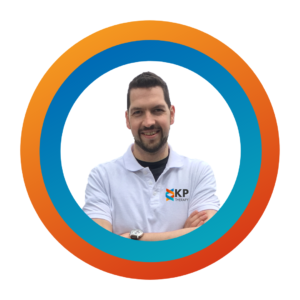
When I first enrolled in the National Qualification in Neuromuscular Therapy back in 2003, I had no idea that it would set me on a path that would change the course of my professional life — and eventually lead to owning my own clinic in Kerry with a team of seven therapists. At the time, I was simply fascinated by the human body: how it moves, how it adapts, and most importantly, how it heals.
Like many who discover Neuromuscular Therapy (NMT) for the first time, what struck me was how practical and logical it felt. This wasn’t a fluffy approach to massage or pain relief — it was grounded in anatomy, physiology, and clinical reasoning. The training at the National Training Centre (NTC) gave me the hands-on skill and scientific understanding I needed to start helping people right away. But it also lit a fire in me. I wanted to understand pain at a much deeper level.
⸻
Discovering the Power of Neuromuscular Therapy
Neuromuscular Therapy is often misunderstood as just another form of deep tissue work. In reality, it’s a structured, evidence-informed approach to assessing and treating soft tissue dysfunction — looking not only at local muscle pain, but at the underlying neurological, postural, and movement factors that drive it.
During my initial training at NTC, I began to see just how interconnected everything is. A “tight hamstring” could be the result of lower back tension. Shoulder pain might be linked to breathing mechanics. This way of thinking completely reshaped my understanding of manual therapy — it wasn’t about chasing pain, it was about finding cause and effect.
That foundation gave me both the confidence and curiosity to go further. The next natural step was the Higher Diploma in Neuromuscular Therapy, which, even then, was recognised as one of the most advanced manual therapy qualifications in Ireland. I went straight into the programme after my National Qualification, and it was here that my practice — and perspective — really evolved.
⸻
Progressing to the Higher Diploma in Neuromuscular Therapy
The Higher Diploma in Neuromuscular Therapy, offered through the National Training Centre in Dublin, builds on everything that makes the NMT qualification so powerful. The focus shifts from “how to treat” to “why things happen” — exploring the neurophysiology of pain, the role of the myofascial system, and the integration of clinical assessment, movement, and rehabilitation.
I completed the Higher Diploma in 2007, after a Continuing Professional Development course in Neuromuscular Techniques with the late Dr. Leon Chaitow. Leon saw the Higher Diploma as my “next year in school,” and he wasn’t wrong — it was a masterclass in precision, reasoning, and respect for the body’s ability to self-heal when given the right input.
Those years shaped not just my technical skills, but my entire philosophy. I learned to combine manual therapy with mindful movement and breathwork — to see the person, not just the problem. That approach still underpins everything we do today at KP Therapy.

From Student to Teacher: Sharing What I’d Learned
By 2008, I found myself on the other side of the classroom — teaching the very subjects that had once blown my mind. Joining the teaching faculty at the National Training Centre felt like a natural extension of my curiosity. Teaching forced me to clarify what I knew, test it against real-world scenarios, and stay up to date with the science of pain, movement, and tissue health.
What I loved most was watching students go through the same transformation I had — starting out focused on technique, then gradually realising that touch, intention, and clinical reasoning matter even more than pressure or posture.
Those early years teaching deepened my respect for the NTC educational model — one that balances hands-on skill with academic depth. Every class, every case study, every postural assessment reinforced a core idea: that manual therapy is both an art and a science.
It also made me more determined than ever to keep learning. I didn’t want to teach yesterday’s methods — I wanted to be part of the ongoing evolution of our profession. That’s what led me to take the next big step: the MSc in Neuromuscular Therapy.
⸻
The MSc in Neuromuscular Therapy – Deepening the Science
In 2014, I enrolled in the Master of Science in Neuromuscular Therapy — a collaboration between the National Training Centre and the University of Chester. The MSc was a turning point. It pushed me far beyond the practical aspects of treatment and into the realms of research, clinical evidence, and the mechanisms behind pain and healing.
At postgraduate level, everything becomes about why. Why do some clients respond instantly, while others take longer? Why does movement sometimes relieve pain faster than manual therapy — or vice versa? And how can we measure outcomes in a way that truly reflects change, not just comfort?
My MSc studies gave me the language and framework to answer those questions. It taught me to critically appraise research, design treatment protocols, and integrate new science into practice without losing the human connection that makes therapy effective.
That blend — rigorous academic grounding and hands-on clinical intuition — shaped the therapist and educator I’ve become today.
⸻
Building KP Therapy – Turning Knowledge into Community
After years of teaching, studying, and running smaller clinics in Monaghan, Dublin, and Cork, I finally opened KP Therapy in County Kerry in 2021.
I had worked solo for years, but opening KP Therapy felt different — it was about building something bigger. I wanted a space where therapists could collaborate, learn from each other, and offer clients the very best of what neuromuscular therapy can achieve.
Kieran Slattery NMT joined me early on, and together we began to grow a team. Today, KP Therapy has seven incredible staff — each bringing their own strengths in manual therapy, movement, and rehabilitation, but all united by the same philosophy:
To treat pain not as an isolated symptom, but as an expression of how the whole person moves, breathes, and lives.
Every day, I see the value of the pathway that brought me here — from the Higher Diploma in Neuromuscular Therapy to the MSc. The education, mentorship, and evidence-based mindset that began at NTC still form the backbone of everything we do.
⸻

Becoming Program Leader – Guiding the Next Generation
Today, as Programme Leader for the Higher Diploma in Neuromuscular Therapy at the National Training Centre, I get to see the next generation of therapists step into their own journeys. It’s an honour and a responsibility I take seriously.
The course continues to evolve — integrating new pain science, fascia research, and clinical reasoning frameworks — but its purpose remains the same:
to give therapists the tools, confidence, and critical thinking needed to create lasting change for their clients.
I often tell students that Neuromuscular Therapy gave me a career that’s never static. It’s a field that keeps moving forward — blending neuroscience, biomechanics, mindfulness, and manual therapy into something truly transformative.
⸻
How You Can Start Your Own Journey
If you’ve ever felt drawn to understanding the human body — not just how it works, but how it feels — I can’t recommend the Neuromuscular Therapy course at the National Training Centre highly enough.
Start with the National Qualification in Neuromuscular Therapy, then progress to the Higher Diploma in Neuromuscular Therapy in Dublin. From there, you can even continue to postgraduate study with the University of Chester MSc pathway.
These qualifications aren’t just certificates — they’re the stepping stones to a meaningful career helping others move better, feel better, and live pain-free.
You can find full course details and enrolment information at ntc.ie.
And if you’d ever like to see what a clinic built on this education looks like, come visit us at KP Therapy in Kerry — we’d be happy to chat.
⸻
Final Thoughts
Looking back, every qualification, every client, every lesson has been part of a bigger picture — one built on curiosity, community, and the belief that movement is medicine.
Neuromuscular Therapy gave me more than a career; it gave me a framework for understanding people, pain, and potential.
If you’re thinking of studying Neuromuscular Therapy in Ireland, or considering the Higher Diploma in Neuromuscular Therapy Dublin, I can tell you from experience: it’s not just a course — it’s a calling.
National Qualification in Neuromuscular Therapy
Recent Comments